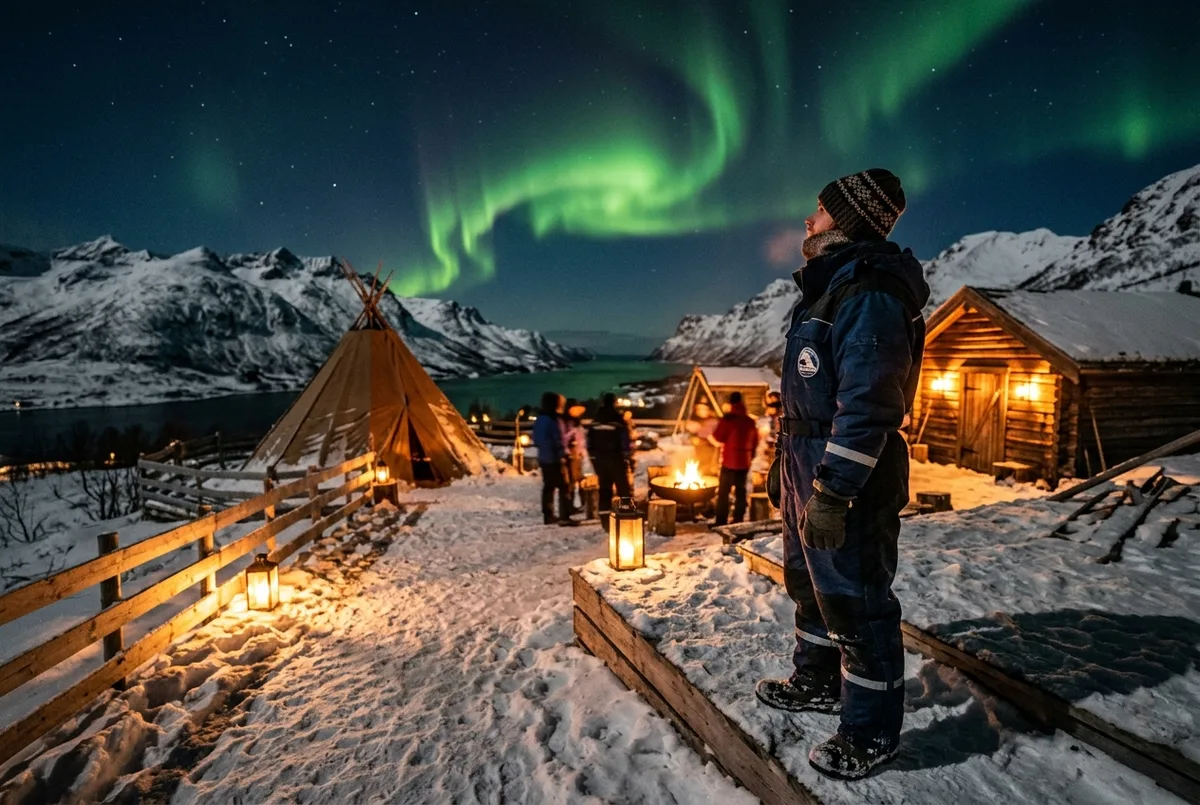
What to wear on a northern lights tour comes down to one problem: you are going to stand mostly still outside, often for an hour or more, in temperatures that can sit at -10C to -15C once the wind picks up. Here is what I’d actually pack, based on what actually keeps people warm out there rather than what looks good in a gear catalog. Layering matters more than any single “miracle” jacket, and knowing what your specific tour operator provides can save you from overpacking or, worse, from showing up underdressed for a long night on the fjord roads.
What Should I Actually Wear on a Northern Lights Tour?
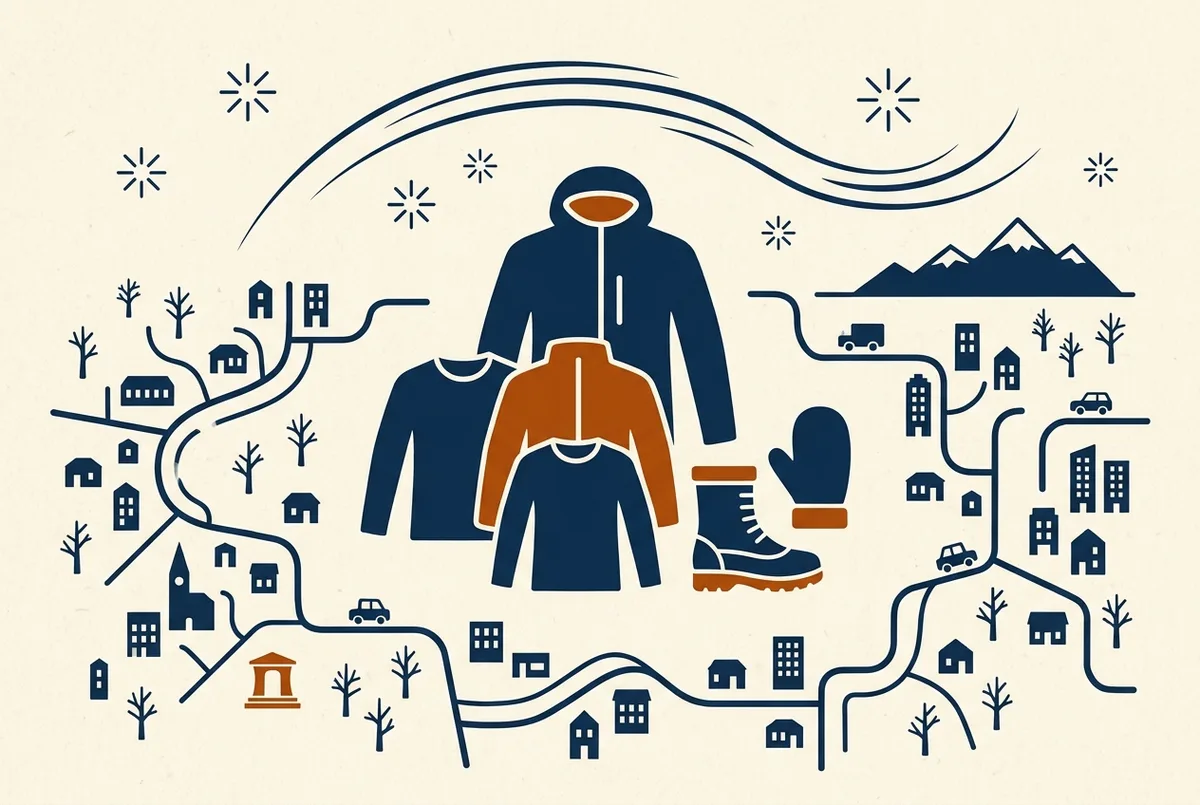
The short answer is three layers: a moisture-wicking base layer, an insulating mid layer like fleece or wool, and a windproof, waterproof outer shell, topped off with wool socks, insulated boots, a warm hat and mittens rather than thin gloves.
I’d skip cotton entirely for every layer touching your skin. Cotton holds sweat against your body and then just sits there getting cold, which is exactly the opposite of what you want on a six to nine hour evening chase. Synthetic or merino wool base layers cost more but genuinely change how the night feels.
How Cold Does It Actually Get Standing Outside at Night?
Tour nights in Tromso’s core season typically run from around -5C down to -15C once you factor in wind chill at an exposed viewing spot, and that cold sets in fast once you stop moving.
I would not judge the temperature by what the daytime forecast says. A calm -8C evening at a sheltered bonfire camp feels very different from the same number on an open, windy fjord viewpoint, so dress for the harsher scenario rather than the average one. My guide to Tromso’s winter weather and daylight goes deeper on what to expect month by month if you are still choosing dates.
What’s the Right Layering System for Aurora Hunting?
Base layer first: a thin, snug thermal top and leggings in merino wool or synthetic fabric. Mid layer next: a fleece or light down jacket for trapped warmth. Outer layer last: a windproof, waterproof shell that blocks the fjord wind, which cuts through anything lighter far faster than the temperature alone suggests.
I’d add a second mid layer, like a thin puffy vest, if you run cold generally, since it is far easier to unzip a layer at a warm bonfire camp than to wish you had brought one. Your legs need the same attention as your torso: thermal leggings under insulated or fleece-lined pants make a real difference over a long, still wait.
Insulated, waterproof winter boots rated for genuinely cold temperatures, worn with a thick pair of wool socks, are the only footwear I would trust for a night spent standing on packed snow and ice.
I would not risk city sneakers or lightly lined boots here, even with wool socks doubled up. Cold seeps up through thin soles fast, and a viewing camp is rarely somewhere you can duck indoors to warm your feet back up. If your own boots are borderline, check whether your chosen operator provides insulated boots, since several do.
Do Tromso Operators Provide Thermal Suits and Boots?
Yes, several Tromso operators include full thermal overalls, and some also provide insulated boots, gloves or heated boot insoles as part of the tour price, which genuinely changes what you need to pack yourself.
I would check the specific tour’s included list before buying expensive Arctic-grade gear you might only use once. The Tromso Small-Group Aurora Chase hands out thermosuits in every size, and the photography-focused tours often add hand warmers and heated insoles on top, so read the listing closely rather than assuming.
What Should I Bring That No Operator Provides?
Your own base layers, wool socks, a warm hat and proper mittens or insulated gloves are worth packing regardless of what a tour supplies, since a shared thermal suit rarely covers everything underneath it.
I would specifically bring my own gloves if I planned to use a camera or phone throughout the night, since tour-provided mittens are usually too bulky for adjusting camera settings. A thin glove liner under a bulkier mitten lets you free a hand briefly without exposing bare skin to the cold for long.
What’s a Common Packing Mistake First-Timers Make?
The most common mistake I see is overpacking a single very expensive coat and assuming it alone will handle everything, instead of building a proper layering system that can be adjusted through the evening.
I would rather see someone show up in three reasonably warm layers than one premium jacket over a t-shirt, since layers let you regulate warmth as you move between a heated bus, a bonfire camp and open sky watching. Bulk from good layering also beats a single stiff coat for genuine mobility if you need to move quickly for a photo.
Does What I Wear Affect My Aurora Photos?
Not directly, but staying warm enough to keep your hands steady and your patience intact absolutely does, since a rushed, cold photographer misses more shots than a comfortable one waiting calmly for the display to build.
My guide to photographing the northern lights in Tromso covers the camera side once you are dressed and ready to actually capture what you see.
Should I Dress Differently for a Boat Tour Than a Bus Tour?
Yes, slightly. On a boat like the Tromso Evening Aurora Cruise, wind chill off open water bites harder than the same temperature on land, so I would add an extra windproof layer over what I’d wear for a bus-based chase, and choose boots with real grip for a wet, sometimes icy deck.
A bus tour, by contrast, gives you a warm cabin to retreat to between stops, so I would put more of my packing effort into what I wear at the outdoor viewing camp itself rather than during the drive. Either way, the core layering system stays the same; it really comes down to where you expect to spend the coldest stretches of the evening.
My Honest Packing Recommendation
I would build a three-layer system from what you already own before spending heavily on new Arctic gear, then check your specific tour’s included list to fill genuine gaps, like boots or a thermal suit, rather than duplicating what is already provided.
If you are still weighing a guided chase against renting a car and managing the cold and the driving yourself, my comparison of guided tours versus self-driving covers that decision in more depth. Whatever you choose, dressing properly is the one variable entirely within your control on a night when the sky itself is not.
Frequently Asked Questions
What should I wear on a northern lights tour in Tromso?
A moisture-wicking base layer, a fleece or down mid layer, a windproof waterproof outer shell, wool socks, insulated winter boots, a warm hat and proper mittens or insulated gloves.
Do I need to buy an expensive Arctic coat for one tour?
No, I would build a layering system from gear you likely already own and check whether your chosen tour provides a thermal suit before buying anything new.
How cold does it get standing outside on a Tromso aurora tour?
Typically -5C to -15C once wind chill at an exposed viewing spot is factored in, colder than the daytime forecast alone would suggest.
Do Tromso tour operators provide winter clothing?
Several do, including full thermal overalls and sometimes insulated boots or heated insoles, so check the specific listing’s included items before you pack.
What’s the biggest mistake people make dressing for an aurora tour?
Relying on one heavy coat instead of proper layers, and wearing cotton against the skin, which holds sweat and gets cold fast once you stop moving.
Explore Understanding the Aurora
For an independent read on conditions before you pack, the Norwegian Meteorological Institute’s forecast is a solid source your guide is likely checking too. Once you are dressed for it, I would go ahead and book an aurora borealis tour in Tromso rather than let cold feet, literally, talk you out of a clear night.