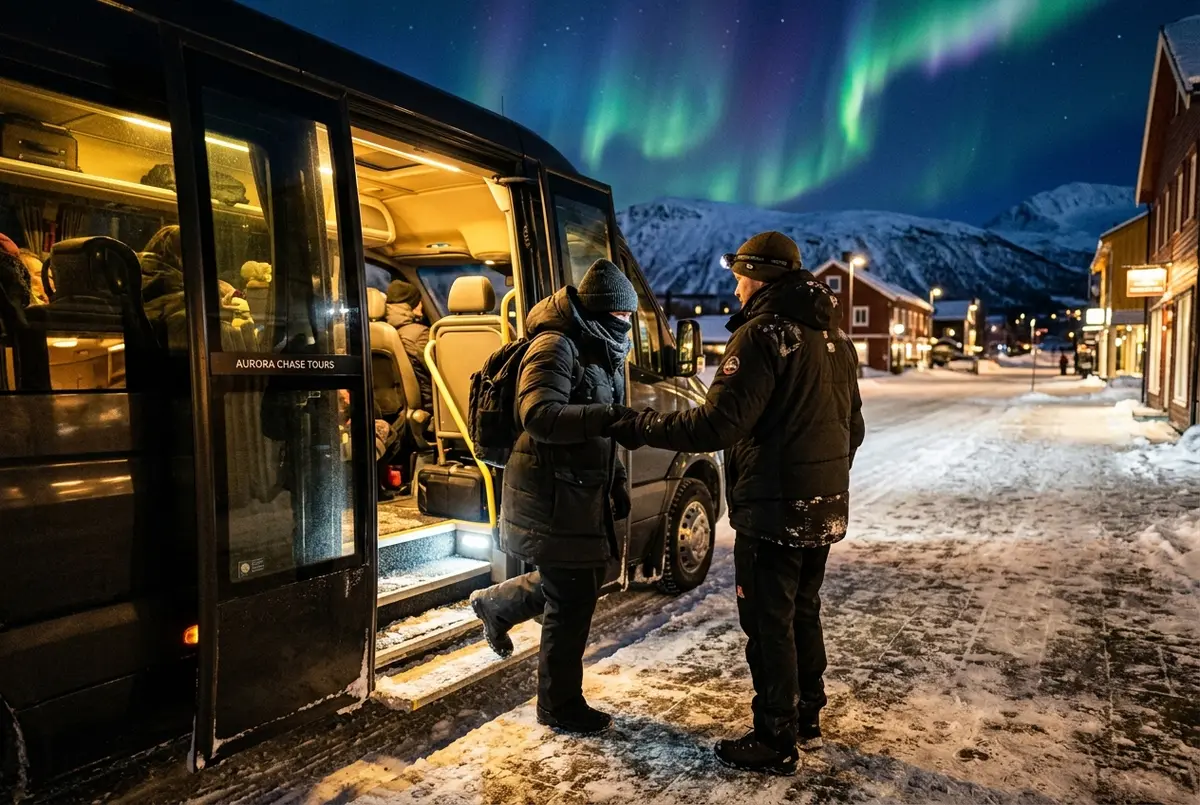
Northern lights tour safety tips for Tromso mostly come down to two things: dressing properly for real cold, and staying off unfamiliar icy roads at night yourself. Neither is complicated once you know what you’re actually managing. I’d rather walk you through the specific risks and how a guided tour handles most of them for you, so you can head out chasing the aurora with a clear picture of what matters and what doesn’t.
Is It Actually Safe to Take a Northern Lights Tour in Tromso?
Yes, genuinely. Established Tromso operators run these chases nightly through the entire winter, with vehicles built for snow and ice, guides who know the roads, and routes planned around current weather rather than guesswork.
I would not let the Arctic setting make this feel riskier than it is. The real risks here are ordinary cold exposure and icy roads, both of which a guided tour is specifically built to manage, not exotic hazards unique to aurora hunting itself.
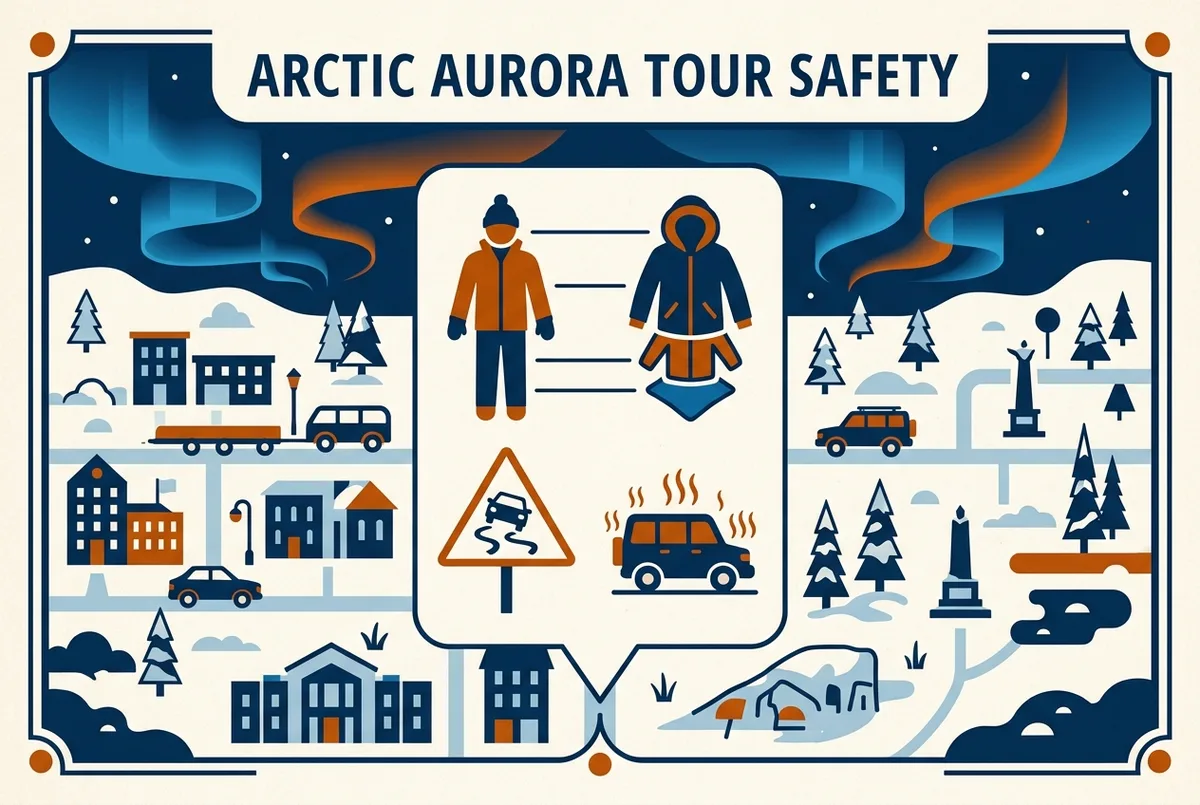
How Cold Does It Get, and What’s the Real Risk of Frostbite or Hypothermia?
Tour nights typically run from about -5C down to -15C once wind chill at an exposed viewing spot is factored in, and standing still in that cold for an hour or more is when the real risk starts, not the temperature number alone.
I would take wind chill more seriously than the raw forecast. Frostbite risk on exposed skin, fingertips, nose, ears, climbs fast once wind picks up at a coastal viewing spot, which is exactly why layering and covering skin properly matters more here than in a calm city center walk. My full layering guide for a northern lights tour covers the exact system I’d build before heading out, and my breakdown of Tromso’s winter weather sets real temperature expectations month by month if you’re still choosing dates.
Why Are Tromso’s Winter Roads So Dangerous to Drive at Night?
Roads outside central Tromso can turn to black ice with little warning, street lighting thins out fast once you leave the city, and the routes a chase actually needs to reach clear sky are rarely the well lit main roads a rental car GPS defaults to.
I would not treat this as a minor inconvenience. Local guides grow up learning how a Norwegian winter road behaves under a headlight beam, and that judgment is not something a careful but unfamiliar driver can replicate on a first attempt, especially while also watching the sky for aurora activity. My comparison of guided tours versus self-driving goes deeper into exactly why I’d choose a guide over a rental car here.
What Do Guides Actually Do to Keep a Chase Safe?
A guide combines live weather cameras, road condition reports and a radio or phone link to other guides already out that night to choose a route that is both clear of cloud and safe to drive, adjusting in real time rather than committing to one fixed plan.
I would treat this live coordination as the actual safety feature, not just a convenience. My guide to the Kp index and solar activity explains the aurora side of that data, but the road and weather judgment layered on top of it is what a guide brings that an app alone cannot.
Is Wildlife on the Road Really a Safety Concern?
Yes, more than most first-time visitors expect. Moose and reindeer cross rural roads around Tromso at night, and hitting one at speed on an icy surface is a genuine hazard rather than a rare curiosity.
I would let this be one more argument for a guide behind the wheel. Experienced drivers here watch for it instinctively, scanning verges and slowing through known crossing stretches in a way a visitor focused on the sky and the road at the same time is unlikely to manage on their first night out.
What Should You Do if You Get Separated From the Group at a Viewing Stop?
Stay near the vehicle or the group’s light source and let your guide know immediately rather than wandering toward a better photo angle alone in the dark. Most viewing stops sit near water, cliffs or uneven frozen ground that is far harder to judge safely once you’re out of sight of the group.
I would resist the urge to chase a slightly better composition alone. A guide can usually walk you to a genuinely better angle safely, and the handful of extra meters rarely matters as much as the photo makes it look afterward.
Are Boat Tours Safer or Riskier Than Bus Tours?
Neither is inherently riskier, but each carries a different profile. A boat cruise like the Tromso Evening Aurora Cruise means open water and wind chill that bites harder than the same air temperature on land, while a bus based chase trades that for icy roads as the main variable, with a heated cabin to retreat to between stops.
I would pick based on cold tolerance rather than assuming one option is the safe choice. Crews and drivers on both formats are trained for their specific environment, so the real safety difference comes down to dressing for whichever one you book, not the format itself.
How Do I Keep My Phone and Camera Battery Working in the Cold?
Batteries drain far faster in sub zero temperatures, so keeping your phone or camera in an inner jacket pocket rather than an outer layer, and only pulling it out to shoot, makes a real difference over a long evening.
I would carry a spare battery or a portable charger kept warm against your body if photography matters to you, since a dead phone is also a safety issue if you ever need to reach your guide or group in the dark. My guide to photographing the northern lights covers the camera settings side once your gear is actually staying powered.
Yes, somewhat, mainly around cold tolerance and how long they can comfortably stand outside rather than any different risk profile from the tour itself. Warm rest breaks matter more for younger children and anyone less used to standing still in deep cold.
I would choose a tour format with a genuinely heated cabin, like a minibus or the Tromso Glass Bus Aurora Dinner, for a family group over an open boat deck, simply because it gives everyone somewhere warm to retreat to on demand rather than waiting out the full stop outdoors.
What’s the Single Biggest Safety Mistake First-Timers Make?
Underestimating the cold because the daytime temperature looked manageable, then standing outside for an hour at a viewing camp in gear meant for a short city walk rather than a genuine Arctic night.
I would rather see someone overdress slightly than assume a jacket rated for a mild winter back home will hold up here. My explainer on what causes the northern lights is worth reading alongside this if you’re still building a full picture of what a Tromso chase actually involves before you book.
My Honest Recommendation
I would not let the Arctic setting talk you out of a Tromso aurora tour. The genuine risks, cold exposure and icy roads, are exactly the two things a reputable guided operator is built around managing, which is a large part of why I’d book a guide over renting a car in the first place.
Dress properly, stay close to your group at viewing stops, and trust your guide’s read on the weather and the road over your own instinct on a first Arctic night. Once those basics are covered, a Tromso aurora tour is a genuinely low risk, high reward way to spend a winter evening, and my full look at whether a tour is worth it covers the reward side of that equation if you’re still deciding.
Frequently Asked Questions
Are northern lights tours in Tromso actually safe?
Yes. Established operators run through the winter with vehicles built for snow and ice and guides who know the roads, so the main things you’re managing are dressing warmly and staying close to your group.
What’s the biggest safety risk on a Tromso aurora tour?
Cold exposure at an outdoor viewing stop and icy roads at night, both of which a guided tour is specifically set up to reduce compared with self-driving.
Is it safe to drive yourself in Tromso in winter?
It carries real risk from black ice, thin street lighting outside the city and wildlife crossing rural roads, which is why I’d recommend a guided tour over a rental car for a first visit.
Do I need special cold weather gear for a safety reason, not just comfort?
Yes. Proper layering reduces genuine frostbite risk at exposed viewing stops, not just discomfort, especially once wind chill is factored in.
Is it safe to bring kids on a northern lights tour?
Generally yes, with a heated cabin format over an open boat deck being the more comfortable and manageable choice for younger children on a long, cold evening.
Explore Understanding the Aurora
For an independent check on road conditions before any winter trip, the Norwegian Public Roads Administration is worth a look. Once you’re dressed and briefed on the basics, I would go ahead and book an aurora borealis tour in Tromso with a guide who already manages the rest.